
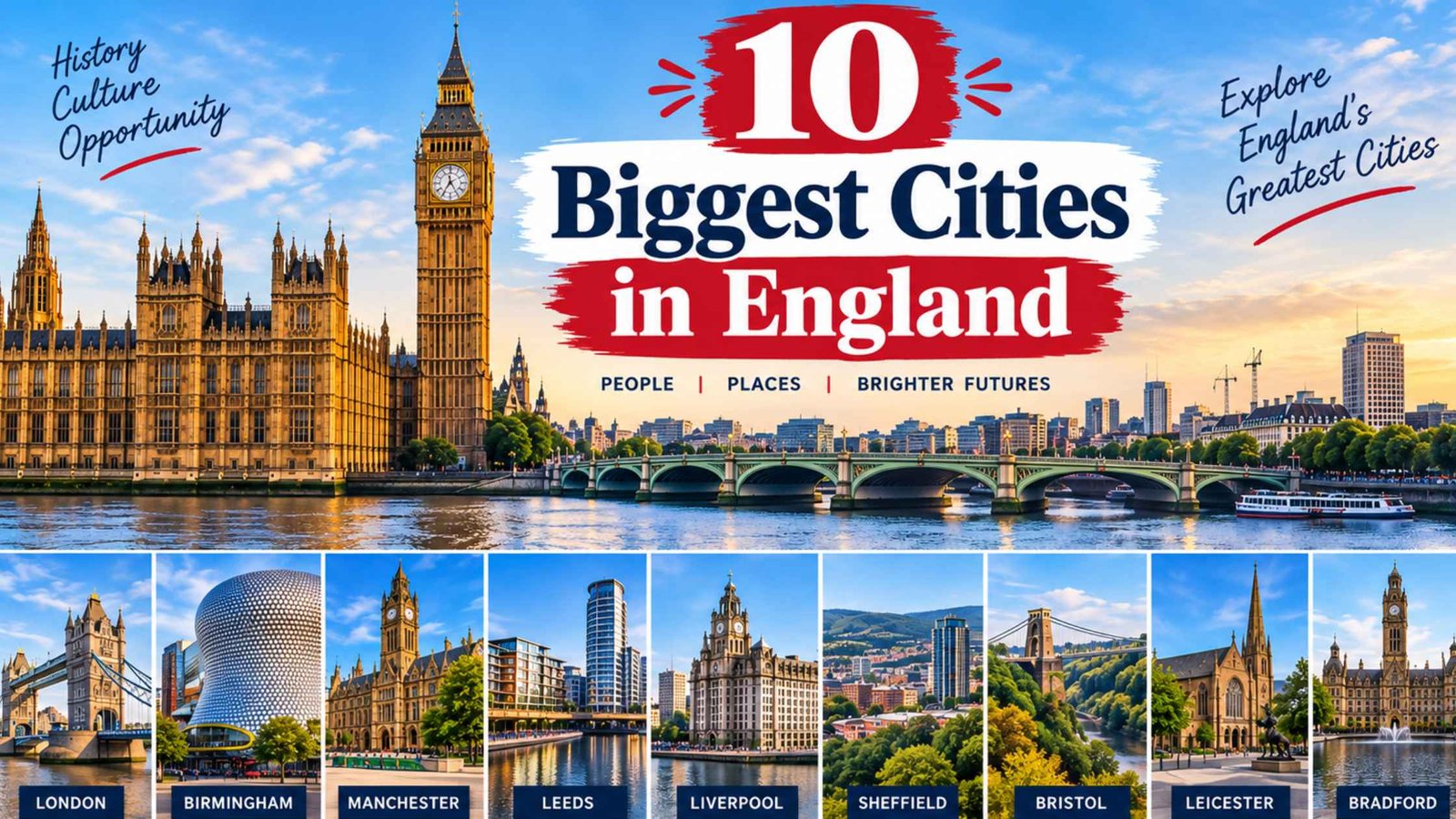
England is home to some of the UK’s largest and most well-known cities. From London and Birmingham to Manchester and Liverpool, these cities are important centres for jobs, education, shopping, culture, sport and tourism.
But what are the biggest cities in England?
The answer can vary depending on how population is measured. A city can be counted using its local authority boundary, its built-up urban area or a wider metropolitan area.
For a simple comparison, this guide looks at the UK’s major urban centres and explains what makes each city important.
10 Biggest Cities in England
Here are 10 of the biggest and best-known cities in England:
| City | Region | Known for |
|---|---|---|
| London | London | History, business, culture and tourism |
| Birmingham | West Midlands | Business, shopping and industry |
| Manchester | North West | Football, music, business and universities |
| Leeds | Yorkshire | Finance, shopping and education |
| Liverpool | North West | Music, football and maritime history |
| Sheffield | Yorkshire | Industry, universities and green spaces |
| Bristol | South West | Harbour, culture and technology |
| Leicester | East Midlands | History, culture and diversity |
| Bradford | Yorkshire | Textile heritage and culture |
| Coventry | West Midlands | Engineering, manufacturing and history |
Now, let’s look at each city in more detail.
1. London
London is the biggest city in England and the capital of the United Kingdom.
It is a huge and diverse city made up of many different neighbourhoods and communities. It is also one of the UK’s main centres for business, finance, government, education and culture.
London attracts people from across the UK and around the world. Millions of visitors come to the city each year to see its famous landmarks, museums, theatres and historic areas.
Some of London’s best-known attractions include:
- Buckingham Palace
- Big Ben
- Tower Bridge
- The London Eye
- The British Museum
- St Paul’s Cathedral
- Hyde Park
- The Tower of London
London is also well connected by public transport, with the Underground, buses, trains and other services covering much of the city.
Because London is so large, its population is measured differently from many other English cities. The ONS does not treat London’s built-up areas in the same way as settlements elsewhere in England.
2. Birmingham
Birmingham is the largest city outside London and one of the UK’s most important urban centres.
It is located in the West Midlands and has a long history of manufacturing, engineering and industry.
Today, Birmingham has a broad economy that includes business, education, retail, healthcare and professional services.
The city is also popular for shopping and entertainment. Birmingham’s city centre has a large choice of shops, restaurants, bars and cultural attractions.
Popular places to visit include:
- Birmingham Bullring
- Jewellery Quarter
- Library of Birmingham
- Birmingham Museum & Art Gallery
- Birmingham’s canals
- Cadbury World
The 2021 Census recorded 1,121,375 people in Birmingham’s built-up area, making it the largest built-up area in England outside London.
Birmingham’s local authority area had around 1.145 million residents in 2021, according to the ONS.
3. Manchester
Manchester is one of the largest cities in northern England and is known for its strong links with industry, football, music and education.
The city played an important role during the Industrial Revolution. Today, it has developed into a major centre for business, media, technology, education and culture.
Manchester is also famous for its football clubs and lively music scene.
Popular areas and attractions include:
- Northern Quarter
- Castlefield
- Manchester Cathedral
- Manchester Art Gallery
- Science and Industry Museum
- Etihad Stadium
- Old Trafford nearby
Manchester has a large student population because of its universities and is also home to many businesses.
According to the 2021 Census, Manchester’s local authority population was around 552,000, up from about 503,000 in 2011.
It is worth remembering that the wider Greater Manchester area is much larger than the City of Manchester itself.
4. Leeds
Leeds is one of the biggest cities in Yorkshire and an important business and financial centre in northern England.
The city has grown from its industrial past into a modern centre for finance, legal services, healthcare, education, retail and technology.
Leeds is also well known for shopping. The city centre has a mixture of high-street shops, independent businesses, restaurants and historic shopping arcades.
Places to explore include:
- Leeds City Centre
- Leeds Kirkgate Market
- Victoria Leeds
- Leeds Dock
- Royal Armouries Museum
- Roundhay Park
Leeds also has a large student population, with several universities and colleges in and around the city.
The Leeds local authority area had around 812,000 residents in 2021, according to the ONS.
5. Liverpool
Liverpool is one of the best-known cities in the North West of England.
The city has a strong maritime history and was once one of Britain’s most important ports.
Liverpool is also famous around the world for music, particularly because of The Beatles. Football is another major part of the city’s identity.
The city has plenty to see and do, including:
- Royal Albert Dock
- Museum of Liverpool
- Liverpool Cathedral
- Liverpool ONE
- The Beatles Story
- Anfield
- The Cavern Club
Liverpool’s waterfront is one of its most recognisable areas, with museums, restaurants, shops and historic buildings.
The city also attracts visitors for football matches, music, festivals and cultural events.
6. Sheffield
Sheffield is a major city in South Yorkshire and is particularly well known for its industrial heritage.
The city became famous for steel production and engineering during the Industrial Revolution.
Today, Sheffield has a more varied economy and is known for its universities, sport, music and green spaces.
One of the city’s most distinctive features is its access to the countryside. The Peak District is close to Sheffield, making it possible to move from the city to open countryside relatively quickly.
Popular places include:
- Sheffield City Centre
- Kelham Island
- Sheffield Winter Garden
- Millennium Gallery
- Sheffield Botanical Gardens
- Peak District
Sheffield is a popular choice for people who want the facilities of a large city while being close to nature.
7. Bristol
Bristol is the largest city in the South West of England and has a long history connected with trade and shipping.
The city developed around its harbour and has since become known for its creative industries, technology businesses, universities and cultural scene.
Bristol is also famous for the Clifton Suspension Bridge, which is one of the city’s most recognisable landmarks.
Other popular attractions include:
- Bristol Harbourside
- Clifton Suspension Bridge
- SS Great Britain
- Bristol Cathedral
- St Nicholas Market
- Bristol Museum & Art Gallery
Bristol has a lively city centre with independent shops, restaurants, cafes and cultural venues.
Its location also makes it an important centre for people living across the South West.
8. Leicester
Leicester is one of the biggest cities in the East Midlands.
The city has a long history dating back to Roman times and has developed into a modern and diverse urban centre.
Leicester is known for its cultural diversity, universities, shopping and sporting history.
There are plenty of places to visit, including:
- National Space Centre
- Leicester Cathedral
- King Richard III Visitor Centre
- Leicester Market
- New Walk Museum
- Abbey Pumping Station
The city also has a large student population and a busy city centre.
Leicester’s history is one of the things that makes it different from many other large English cities. Visitors can find Roman remains, medieval buildings and modern developments within a relatively small area.
9. Bradford
Bradford is a major city in West Yorkshire.
It became particularly important during the Industrial Revolution because of its wool and textile industries. Many historic mills and buildings still reflect this part of the city’s past.
Bradford is also known for its diverse communities and food culture.
Popular attractions include:
- National Science and Media Museum
- Bradford City Park
- Little Germany
- Bradford Industrial Museum
- Cartwright Hall
- Salts Mill nearby
Bradford is close to Leeds and forms part of the wider urban area of West Yorkshire.
The city has also developed a strong cultural identity, with museums, restaurants, festivals and historic buildings attracting both residents and visitors.
10. Coventry
Coventry is one of the major cities of the West Midlands.
The city has a long history and became particularly important for manufacturing and engineering.
Coventry was heavily damaged during the Second World War and was later rebuilt. One of its most famous landmarks is Coventry Cathedral, where the remains of the old cathedral stand beside the newer building.
The city is also known for its connection with the British motor industry.
Some popular places to visit include:
- Coventry Cathedral
- Coventry Transport Museum
- Herbert Art Gallery & Museum
- War Memorial Park
- Spon Street
- Coventry city centre
Coventry is also home to universities and has a large student population.
Why Are England’s Biggest Cities Important?
England’s largest cities play an important role in the country’s economy and everyday life.
Jobs and business
Large cities provide jobs across many industries, including finance, technology, healthcare, education, retail, manufacturing and professional services.
Universities and education
Many of England’s biggest cities are home to universities and colleges.
This brings students from across the UK and overseas and contributes to the local economy.
Transport
Large cities usually have extensive transport networks.
Major railway stations, bus services, motorways and other transport links connect these cities with other parts of England and the UK.
Shopping and entertainment
England’s biggest cities offer a wide range of shops, restaurants, theatres, cinemas, music venues and sporting events.
Tourism
Cities such as London, Liverpool, Manchester and Bristol attract visitors from across the UK and overseas.
Their history, architecture, museums, sport and cultural attractions make them popular places to visit.
Biggest Cities in England: Quick Summary
| City | Part of England | Main highlights |
|---|---|---|
| London | South East / London | Landmarks, business, culture and tourism |
| Birmingham | West Midlands | Shopping, business and industry |
| Manchester | North West | Football, music, universities and business |
| Leeds | Yorkshire | Finance, shopping and education |
| Liverpool | North West | Music, football and maritime heritage |
| Sheffield | Yorkshire | Steel heritage, universities and countryside |
| Bristol | South West | Harbour, technology and culture |
| Leicester | East Midlands | History, diversity and education |
| Bradford | Yorkshire | Textile heritage, culture and museums |
| Coventry | West Midlands | Engineering, history and universities |
Other Large Cities in England
The 10 cities above are not the only large urban centres in England.
Other well-known cities include:
- Nottingham
- Newcastle upon Tyne
- Southampton
- Derby
- Plymouth
- Stoke-on-Trent
- Wolverhampton
- Reading
- Hull
- Sunderland
Each has its own history, economy and local identity.
The ONS Census 2021 data includes many built-up areas across England and provides population and household information for individual settlements.
Conclusion
England has a wide range of large and important cities, each with its own character.
London is the country’s largest city, while Birmingham is the largest outside the capital. Other major cities such as Manchester, Leeds, Liverpool, Sheffield and Bristol are important centres for business, education, culture and tourism.
Cities such as Leicester, Bradford and Coventry also have large populations and rich histories.
If you are comparing the biggest cities in England, remember that population figures can vary depending on the geographical boundary being used. For the most reliable comparison, it is best to check the definition and source behind each figure.
For official population information, the Office for National Statistics’ Census 2021 built-up-area data is a useful starting point.
Frequently Asked Questions
What is the biggest city in England?
London is the biggest city in England by population. It is also the capital of the UK and the country’s largest urban centre.
What is the biggest city outside London?
Birmingham is the biggest city outside London. The ONS recorded 1,121,375 residents in Birmingham’s built-up area in the 2021 Census.
Is Manchester bigger than Birmingham?
No, when comparing the relevant population measures, Birmingham is larger. Manchester is nevertheless one of England’s major cities and an important urban centre in its own right.
Is Leeds a big city?
Yes. Leeds is one of the largest cities in England and the largest local authority area in West Yorkshire by population. The Leeds local authority area had around 812,000 residents in the 2021 Census.
What are the biggest cities in northern England?
Some of the largest and best-known cities in northern England include Manchester, Leeds, Liverpool and Sheffield.
Which English city has the largest population outside London?
Birmingham has the largest population among England’s built-up areas outside London, according to Census 2021 data from the ONS.